Plinko labels can cover pegboard games or pokie-themed products, so mechanics, access rules and payment conditions need separate checks.

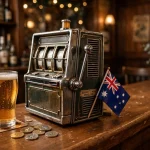
“Plinko slot” can describe more than one thing. Sometimes the phrase points to a Plinko-style game: a token or ball drops through a field of pegs and lands in a position associated with an outcome. Sometimes “slot” is being used loosely as a casino-game label. And sometimes the words refer to a pokie-themed product, with reels, symbols and the familiar structure of a slot machine. Those formats are not interchangeable simply because their names share a word.
The useful distinction is the underlying mechanism. A Plinko-style game is organised around a falling object moving through a pegboard-like layout. A pokie is organised around spinning reels and symbol combinations. A game’s name, artwork or promotional description may blur that difference; its rules and screen layout tell you more. If you are trying to identify what a title actually is, look for the stated game type and mechanics rather than relying on the word “slot” in its label.
That matters for titles that combine Plinko with terms such as “rush,” “temple” or “gods.” Those words may suggest a theme, a brand or a particular product family, but they do not establish that the game uses reels—or that it follows a Plinko format. Nor does a title containing “Plinko” by itself tell you how outcomes are generated. The name is a signpost, not a rules sheet.
In everyday casino language, “slot” may mean a traditional reel-based pokie. In a product catalogue, it can also be used more broadly to group casino-style games, even when the visual action differs from spinning reels. That loose labelling is why a request for a Plinko slot can lead to descriptions of different formats.
A slot-machine version would be recognisable by its reel structure and symbol-based play. A Plinko-style version would be recognisable by the path of a falling piece across pegs or pins. Some interfaces can borrow the look of one format while using mechanics associated with another, so appearance alone is not conclusive. The game rules are the better comparison point.
This is also why phrases like “Plinko slot game” or “Plinko casino slot machine” do not settle the question. They can be shorthand for a game someone expects to find, rather than a precise technical category. A “top” label or a review heading does not make the classification clearer: the relevant details remain the mechanics, the rules and the provider’s description.
Return to player, or RTP, is a theoretical measure associated with a game’s long-run returns. It is not a forecast of what an individual session will return, and it does not establish that two games with similar labels behave alike. RTP only makes a meaningful comparison when it is tied to the specific title and version being discussed.
KA Gaming provides one narrow example of why provider and format matter: its slot RTP percentages typically fall between 94% and 96%. That range applies to KA Gaming slots as a provider-specific detail. It should not be transferred to every title that uses the word “Plinko,” to every Plinko-style game, or to games from other providers. A shared label is not evidence of a shared RTP.
When a listed percentage is presented without a clearly identified game and provider, treat it as incomplete information rather than a property of the whole category. Even where a title has a published RTP, that figure is not a promise of a particular result. It describes a theoretical return over extensive play, not what you will receive in a single run.
The same discipline applies to demo or review labels. A “demo” tag describes a mode or presentation, not necessarily the game’s format; a review title is someone’s description, not proof of how the software works. Check whether the rules show reels and symbol combinations, or a pegboard path and landing positions. Those observable features provide a firmer classification than a name designed to catch attention.
For a clean comparison, sort the possibilities by mechanism first, then by provider and published game information. Under that test, a reel-based pokie remains a pokie even if its title borrows Plinko language. A pegboard game remains Plinko-style even if a catalogue groups it with slots. The label may be messy. The mechanics are less so.
If you’re looking at Plinko casinos in Australia, use this list to check the operator details disclosed here before deciding where to play. The information provided does not confirm whether Plinko is available at any particular operator.
SpinsUp
SpinsUp is listed with a Curacao Gaming Control Board licence, OGL/2023/174/0082, held by Dama N.V.
LevelUp Casino
LevelUp Casino lists a Curacao eGaming licence, OGL/2023/174/0082, held by Dama N.V., and a minimum deposit of A$15.
Rollero Casino
Rollero Casino is listed with a Curacao Gaming Control Board licence, OGL/2023/176/0095, held by Hollycorn N.V.
SkyCrown
SkyCrown lists a Tobique Gaming Commission licence and a minimum deposit of A$30. Its stated payout times are around 10–15 minutes for crypto and 1–5 days for fiat.
Wild Tokyo
Wild Tokyo lists a Curacao licence and a minimum deposit of A$10. Its stated payout times are 30–60 minutes for crypto and 1–5 days for fiat.
Kingmaker
Kingmaker lists a minimum deposit of A$30, with stated payout times of around 90 minutes for crypto and 1–5 days for fiat.
MrPacho
MrPacho lists a minimum deposit of A$30. Its stated payout times are 30–120 minutes for crypto and 24–72 hours for fiat.
House of Pokies
House of Pokies lists an international iGaming licence, but the jurisdiction is not named. Its minimum deposit is A$30, or A$10 with PayID, and PayID payouts are stated as taking 1–24 hours.
Uptown Pokies
Uptown Pokies lists a Curacao licence and says it has operated since 2017. Its minimum deposit is A$20.
Golden Pokies
Golden Pokies lists a Curacao licence; no other operator details were provided.
An offshore website can accept Australian payments without being permitted to provide online casino services to people in Australia. Those are separate questions: one concerns whether a payment can be processed; the other concerns what the operator is legally allowed to offer to someone located here.
The Interactive Gambling Act 2001 restricts operators from offering online casino services to people in Australia. Real-money casino-style games, including slots and table games, fall within the prohibited services when provided to customers in the country. A website’s use of the words “online casino” does not alter that distinction, nor does adding a Plinko-style game to its catalogue.
Offshore online casinos often accept Australian payments while operating under licences issued elsewhere. A successful deposit, an Australian-dollar balance or a payment method that works from Australia may show that a transaction was accepted. It does not establish that the operator is permitted to offer casino games to people physically in Australia.
Legal Restriction
The Interactive Gambling Act 2001 restricts operators from offering online casino services to people in Australia, regardless of whether a site accepts Australian payments.
The same distinction applies to a site that describes itself as a Plinko casino, presents Plinko as a live game, or groups it with other online casino games. Labels and payment options can tell you how a service presents itself. They do not change the legal status of providing prohibited online casino services to Australian customers.
That matters because an “Australian” setting on a website can mean several different things. It might refer to payment options, currency display, customer support language or marketing aimed at Australians. None of those features, on its own, means the service is authorised to offer real-money casino games in Australia. The relevant question is not simply whether you can access a page or submit a payment. It is whether the operator may provide that kind of service to someone located here.
An offshore licence belongs to the jurisdiction that issued it. It is not an Australian authorisation, and it does not displace the restrictions in Australian law. A site may describe its licence prominently, but that information should not be read as proof that it can legally supply online casino games to Australian residents.
This is a useful distinction for any casino-style game, not just Plinko. Searching for a real-money Plinko game on a casino website does not turn the game into a different legal category. Nor does describing it as a live casino experience or combining it with other games establish that it may be offered here.
A site can therefore appear open to Australians and still be offering a service that the law restricts. Availability and permission are not synonyms. A page loading in your browser is not a legal assessment; a payment going through is not one either.
The legal restriction is directed at operators providing prohibited services. Players are not criminalised simply for using offshore sites. That distinction is important: explaining the restriction should not be confused with saying that an individual user faces criminal prosecution merely for accessing an offshore casino.
It also does not make the operator’s service permitted. The fact that a player is not criminalised does not transfer the operator’s responsibilities to the player or remove the limits on what can be offered in Australia. Keep the two questions separate: what the law restricts operators from providing, and whether a player is personally penalised for using an offshore site.
Players are not criminalised simply for using offshore sites, but this does not make the operator's service permitted under Australian law.
Terms such as “online casino with Plinko” can describe a site’s own menu, rather than its status under Australian law. A result that calls a game a casino Plinko title, or presents a Plinko game alongside casino offerings, is describing the product category. It is not a statement that the service is permitted for Australians.
The same applies when the wording suggests real-money play. The phrase describes the kind of activity being offered, not whether it may legally be supplied to someone in Australia. If you are physically in Australia, the restriction on online casino services remains relevant regardless of the site’s branding, the game’s presentation or which payment methods it accepts.
The practical comparison is straightforward: an offshore operator may accept Australian payments, but payment acceptance does not equal permission to offer online casino services here. The law’s focus is the service provided to people in Australia, not how neatly the website labels it. A familiar name is not a licence.
A bonus can make a balance look larger without making that balance available to withdraw. The key distinction is between cash you deposited, bonus credit supplied under an offer, and winnings generated while using that credit. The conditions attached to each can differ. If you are checking what a real-money balance means, read the withdrawal rules alongside the bonus terms—not just the amount displayed on screen.
A wagering requirement sets a betting target that must be met before bonus-derived winnings can be released. Some specialist reviews describe requirements in the range of 30–50x, but that is not a universal rule. The operator’s specific terms determine what is counted, which games qualify and what happens if the conditions are not met. A bonus is therefore not cash in hand; it is conditional credit.
A worked example makes the scale easier to judge. In one specialist review’s example, a $100 bonus with a 40x wagering requirement calls for $4,000 in bets before bonus-derived winnings can be withdrawn. That figure is the required turnover, not a suggested budget and not a promise that the player will retain or win $4,000. The distinction matters: the target measures bets placed, while the amount ultimately available may depend on the results and the offer’s other rules.
Check what the multiplier applies to. It may be calculated against the bonus, the deposit, or a combined amount; those are different starting points. Also look for a deadline, a maximum amount that can be converted, excluded games, and any rules on stake size. Do not assume a displayed balance is withdrawable until the terms say so and the required checks have been completed.
A wager may not count in full. For example, one specialist review reports a bonus condition under which blackjack contributes only 10% toward wagering. On that basis, the same amount of play can advance the requirement by less than a player might expect. This is an example of a specific reported term, not a general rule for all offers or games.
Attention: If a game is excluded or has a low contribution rate, progress toward a wagering target can be significantly slower than the total bet amount suggests.
That is why the contribution table matters as much as the headline multiplier. If a game is excluded, play on it may add nothing to the target. If a game contributes only a fraction, progress can be slower than the total bet amount suggests. The comparison criterion is straightforward: an offer is easier to assess when its calculation base, eligible games and contribution rates are stated plainly. A large bonus alone tells you very little.
The terms should explain whether your own deposited money can be withdrawn while a bonus is active, whether withdrawing cancels the offer, and how winnings are treated. These details can affect a cashout even when the player has met a displayed target. If the conditions are unclear, do not treat the balance as available funds.
“No-deposit” wording does not remove the need to check the conditions. A bonus that does not require a deposit can still restrict how winnings are used or withdrawn. Read the eligibility rules and withdrawal clauses before relying on any advertised figure. The practical test is not whether credit appears in an account, but whether the terms allow the resulting amount to be paid out.
A request to withdraw may also trigger checks against the applicable terms. The bonus conditions and the withdrawal process are separate questions: satisfying a wagering target does not automatically establish that every other condition has been met. Keep a copy of the terms that applied when the bonus was accepted, and compare them with the balance breakdown and any explanation given for a restriction.
For Australian readers, this is a financial explanation, not an invitation to use an online casino. Real-money online casino services cannot lawfully be offered to people in Australia, and players must be at least 18 to gamble. Do not confuse a conditional bonus balance with withdrawable cash, or a promotional label with permission to provide a service. The arithmetic is simple. The conditions are not.
A Plinko-style game and a pokie belong to different game formats, even when both appear under a broad casino-games label. In Plinko, the central action is a ball moving through a field of pegs towards an outcome area. A pokie is built around spinning reels and symbols. Similar labels on a menu do not make the underlying games interchangeable.
That distinction matters if you are trying to understand what a game actually offers. A page or category that groups Plinko with other casino games may be using “casino” as a broad label, not describing a shared format or feature set. In particular, the presence of progressive jackpots among pokies does not mean a Plinko game has a progressive prize. Check the rules for the specific game rather than transferring a feature from one category to another.
| Point of comparison | Plinko-style game | Pokie |
|---|---|---|
| Main format | A ball travels through pegs towards an outcome area | Reels spin and display symbols |
| Progressive jackpot implication | Do not assume one is included | Some pokies are linked to progressive jackpots |
| What to check | The game’s own rules and displayed features | Jackpot type, contribution rate and qualifying bet |
A progressive jackpot increases as play contributes to it. The pool may be attached to a single machine, or it may be shared across a network. These are commonly described as standalone and networked progressives.
A standalone jackpot is local to an individual machine. A networked jackpot draws contributions across multiple linked pokies; depending on the arrangement, the network may span machines or an online operator’s fleet. The important difference is the reach of the pool, not a promise that a particular player will win it. A larger network can connect more machines, but the jackpot label alone does not tell you the rules for qualifying or the odds of a prize.
Keep this firmly in the pokie column. A progressive jackpot is a feature of the linked pokie arrangement, not a general property of casino games and not an automatic feature of Plinko. A game’s name, artwork or placement beside jackpot titles is not evidence that it shares their prize pool. Read the game’s own information.
A progressive jackpot is a feature of linked pokie arrangements and is not an automatic feature of Plinko-style games.
Before treating a progressive figure as relevant, find out whether your bet qualifies. The contribution rate tells you how play feeds into the jackpot pool. The minimum qualifying bet tells you what stake is required for eligibility. These conditions can differ between games, so do not assume that any bet triggers jackpot participation.
A specialist review reports that some games set a minimum qualifying bet, with A$1.00 as one example. That is an illustration, not a rule for every pokie. Check the current game rules for both the qualifying stake and contribution rate; if either is unclear, the displayed jackpot amount is not enough to establish that your play is eligible.
This is a useful comparison criterion: the standalone label tells you the pool is local, while the networked label tells you it spans linked games. Neither label answers the qualifying-bet question. That takes a separate check.
For Australian readers, a casino-style category label does not change the legal status of the service behind it. The distinction here is about game formats, not an invitation to play. Anyone who gambles must be at least 18, and gambling can cause serious harm to vulnerable people. A jackpot is a feature to understand, not an income plan.
Plinko may attract attention as a distinct game format, but figures about Victorian pokies measure a different part of gambling: the losses associated with poker machines and their impact on players and communities. They do not establish anything about the outcomes of Plinko-style games.
A report by gamble.com.au put Victorian poker-machine losses at $2.6 billion for the year it covered. That total exceeded the figure reported for 2015 by more than $44.7 million. The comparison gives scale to the financial impact, but it should be read as a report about a particular period, not as a timeless measure of what players lose each year.
The same report said the Epping Plaza Hotel in Melbourne’s north generated more than $21 million from its 100 machines over the year covered. A venue-level figure makes the concentration of activity easier to see; it does not mean every machine or every player produced the same result. Nor does a high venue total describe the experience of any individual. Aggregates are blunt instruments.
For someone weighing up casino-related material, these figures are relevant as context, not as a review score or a guide to choosing a game. Large losses across a market can coexist with very different individual experiences, while still signalling that gambling can cause serious harm, particularly for vulnerable people. A game’s presentation or label does not remove that risk.
Reform proposals address the conditions under which losses can accumulate. Senator Nick Xenophon and MP Andrew Wilkie proposed limiting poker-machine bets to $1. That was a proposed measure, not a statement that the limit became a rule. Its significance lies in the policy question it raises: whether changing the maximum stake can reduce the pace or scale of harm, and how such a measure should be assessed.
The proposed limit was specific to poker machines. It should not be carried across to Plinko or treated as evidence about a Plinko product. The useful comparison is narrower: both discussions sit within the broader question of gambling risk, but the figures and policy proposal above concern Victorian pokies.
When you encounter a dramatic venue total, separate three things in your notes: the reporting period, the machine category, and whether a policy was proposed or enacted. Those distinctions prevent a local figure from becoming a claim about every game, every player or the current rules. Serious losses deserve attention; precision matters too.
For Australians, access to a gambling website is not the same as permission for that service to operate here. The Australian Communications and Media Authority (ACMA) is the federal regulator responsible for enforcing the Interactive Gambling Act 2001 and checking compliance with federal interactive gambling laws. Its remit includes online services offering prohibited gambling and advertising for those services.
ACMA can ask Australian internet service providers to block a website when it provides an interactive gambling service prohibited in Australia or advertises one to Australians. A block can make a site unavailable through an Australian connection, but it is an enforcement measure—not an endorsement of any other site or a guarantee about what a visitor may encounter elsewhere.
The regulator’s published enforcement totals show the scale of this work. Since November 2019, ACMA has blocked more than 1,455 gambling and affiliate websites after taking enforcement action. That figure covers both gambling services and affiliate sites, rather than only casino operators.
There is also a reported difference in the number of services said to have left the Australian market after ACMA began enforcing the rules in 2017. One account puts the total above 210; another reports more than 190. Those figures should not be blended into a single precise count. They indicate that services have withdrawn, while leaving the reported total disputed.
A blocked page is a sign that access has been restricted, not proof that every related website or link is safe, lawful or suitable. The same applies to a Plinko-style casino page: its label, layout or apparent availability does not determine whether the service may legally offer online casino gambling to people in Australia. Under the federal framework, real-money online casino services are prohibited for Australian customers, and ACMA’s role is to enforce that framework.
Repeatedly changing a website's address or holding a foreign licence does not grant an operator permission to provide prohibited casino services to people in Australia.
If a site is inaccessible, repeatedly changing its web address does not alter the underlying rule. Nor does a foreign licence give an operator permission to provide prohibited services to people physically in Australia. ACMA’s blocking powers are one part of how the federal restrictions are applied.
This is a market-level enforcement picture, not a rating of individual games or websites. The useful distinction is between a service being reachable at a particular moment and being permitted to offer its gambling service in Australia. Availability is not authorisation.
A free demonstration can help you understand how a Plinko-style game looks and behaves on screen. You can observe the layout, follow how a round begins and ends, and see how the result is displayed without treating that presentation as evidence of what real-money play would produce.
That is a narrow use, but a useful one. If you are trying to understand a game’s interface, free play may show whether its controls and explanations are clear to you. It cannot establish how often any result will occur, what you would receive in a real-money round, or whether a particular version is suitable for Australian players.
The distinction matters because a practice mode and real-money play are not interchangeable conditions. A result seen in a free session does not predict a later result, and repeated practice does not make an outcome more certain. It is a demonstration, not a forecast.
Labels such as “free spins” can also be unclear without context. They do not, by themselves, tell you whether an activity is a demonstration, a promotion, or something with conditions attached. Read the wording on the page rather than assuming that “free” means unrestricted or that the experience matches real-money play.
A sensible comparison is therefore about presentation, not returns: can you follow the rules shown, understand what happens during a round, and distinguish the game’s display from a promise about results? If those points are not clear, the free version has not answered the important question.
Free access should not be treated as an invitation to seek out real-money casino services. Under Australia’s Interactive Gambling Act 2001, operators cannot provide real-money online casino games to people in Australia. If you are under 18, gambling is not appropriate; and for vulnerable people, gambling can cause serious harm.
Free play shows the screen. Nothing more.
When you look at a Plinko-style game alongside cryptocurrency, the payment method deserves a separate check from the game itself. A crypto option can affect how a withdrawal is processed, but speed alone does not tell you how much value will reach your wallet.
One specialist review reports that crypto withdrawals often clear quickly. The same review notes the trade-off: network fees and conversion spreads can reduce the amount received. Treat that as a report about payment experience, not a fixed promise. Processing can depend on the service and the transaction, while fees and exchange rates can change.
For a useful comparison, follow the value through each step. Check the amount shown for withdrawal, whether a network fee is deducted, and what conversion rate applies if the balance is exchanged into another currency. Then compare the final amount expected in your wallet with the amount that will be credited after conversion. A quick transfer can still be a poor result if the deductions are large.
Also keep the payment route clear. A platform balance, a crypto transfer and a later conversion are separate stages; a displayed balance is not necessarily the amount you will receive in a wallet or after exchanging it. Confirm which currency the withdrawal is quoted in and whether the recipient wallet supports the relevant asset and network. A mismatch can create delay or loss, not a clever shortcut.
The practical criterion is net value received, not the label “crypto” or the claimed speed. If the fee structure or conversion terms are unclear, you cannot make a reliable comparison. Fast, but not free.
A bonus described as “no deposit” still has conditions. The label tells you something about how the offer is presented; it does not tell you whether bonus-derived winnings can be withdrawn, which games count towards wagering, or what happens if you stop playing. Treat the written terms as the actual offer, not the headline.
A specialist review describes wagering requirements for bonus-derived funds as often being stated at 30–50 times the bonus or another specified amount. That range is not a fixed rule for every promotion. Check the particular terms for the calculation base, eligible games, contribution rates, expiry conditions and any withdrawal restrictions. Bonus funds are not cash, and winnings linked to them may remain unavailable until the stated wagering checks are complete.
A Plinko-themed promotion—or a version presented for Dutch-speaking users—does not, by its title alone, establish who can claim it or what its conditions are. The same applies to an offer described as having no deposit requirement: read the eligibility and withdrawal clauses rather than inferring them from the label. If the terms are unclear, you cannot reliably calculate what the offer would require.
Keep wagering conditions separate from payment timing. Completing a wagering requirement is a condition attached to bonus-derived funds; it is not a promise about when a bank transfer will arrive. A specialist review notes that a BPAY transfer may take a bank day, but that timing does not alter the bonus rules or guarantee a particular payout schedule.
A useful comparison is therefore two-column: first, what must happen before funds become withdrawable; second, how the chosen payment method is described as processing. Mixing those questions makes a conditional balance look like available cash. It is not.
A page aimed at players in the UK may use familiar terms and describe Plinko, but that does not make its information suitable for someone in Australia. Rules, payment arrangements and the availability of services can differ by jurisdiction. Treat a country label as a clue about the intended audience, not as evidence that the service can lawfully offer online casino games to Australians.
The distinction matters here: under Australia’s Interactive Gambling Act 2001, operators cannot provide real-money online casino games to people in Australia. A site’s acceptance of Australian visitors or payments does not change that. The relevant question is not whether a page looks local or mentions Australia, but whether its claims actually address the Australian context.
“Lucky” may be part of a game name, a brand phrase or promotional wording. On its own, it tells you nothing about a game’s rules, odds or suitability. Likewise, “casino guru” can refer to a third-party reviewer or label; it is not proof of independent verification. Check what the writer is assessing and whether the explanation distinguishes a Plinko-style game from other products carrying similar wording. Do not treat confident rankings as a substitute for evidence.
A useful comparison starts with the criterion: jurisdiction for legal context, clear game descriptions for understanding, and transparent sourcing for claims. Which page is more useful depends on what you need to establish; a UK-focused review may explain its own market well while answering little about Australia.
Any gambling is restricted to adults aged eighteen or older, and problem gambling can cause serious harm, particularly to vulnerable people. A label is not a safeguard.