CashToCode references alone do not confirm casino acceptance, game support, deposit terms or withdrawal availability.
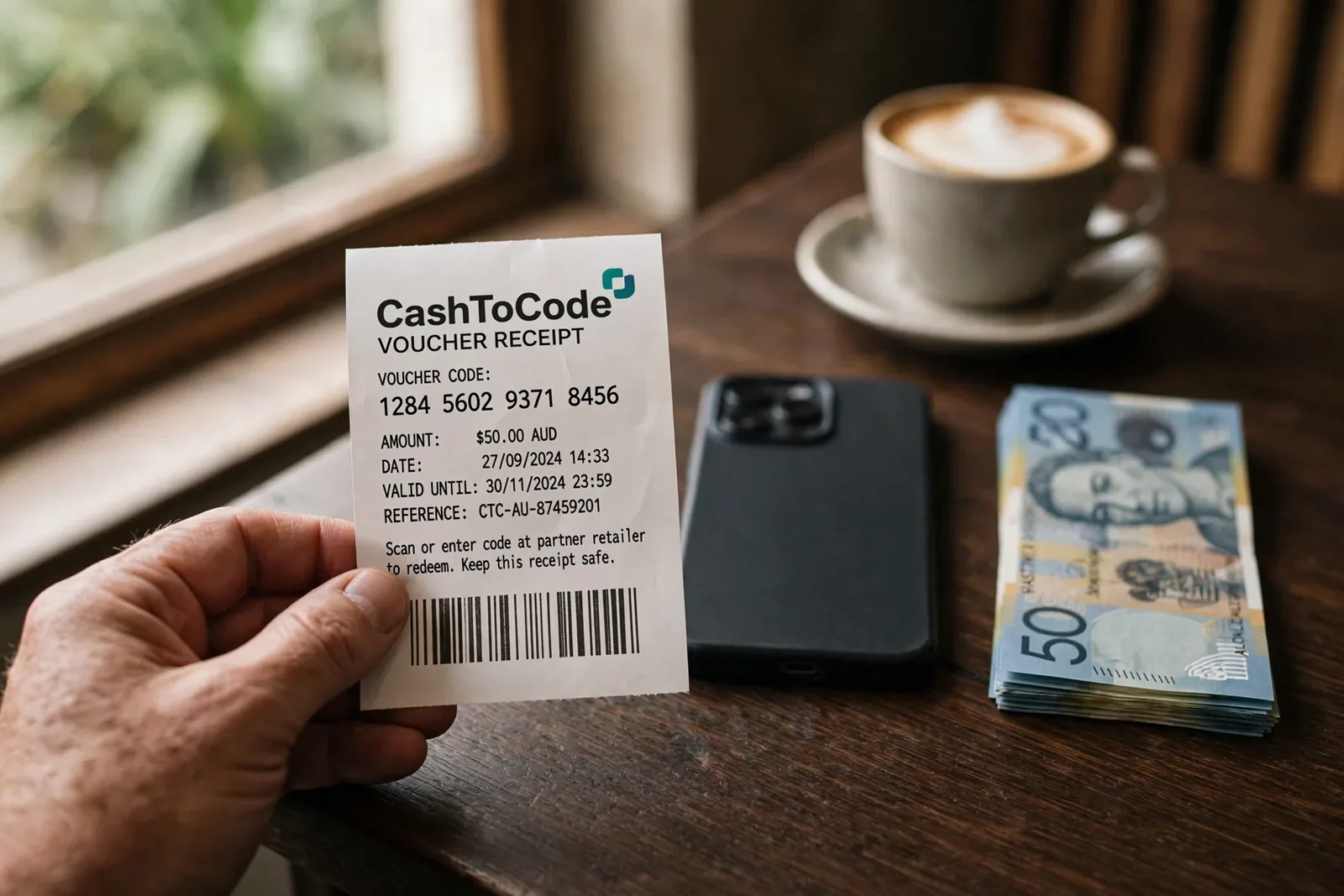
A reference to CashToCode beside online pokies does not, by itself, establish that a particular operator accepts that payment method. The words may describe what someone hopes to find, but they are not evidence of a working payment option. For you, the key distinction is between a general mention of CashToCode and a current, operator-specific statement that it is supported.
That distinction matters because payment information can be incomplete or outdated. A page may discuss payment services broadly, use a list that was not checked against an operator’s current terms, or mention a method without identifying which products or transactions it applies to. None of those details confirms acceptance for a particular service. A clear claim needs to identify the operator and the relevant payment function, and it needs to be current enough to rely on.
“Pokies” also narrows the question. A payment method appearing in a general discussion of gambling does not prove it is available for online casino-style games. Nor does a reference to CashToCode on a site establish that it applies to every service or customer group associated with that site. The claim has to match the specific context being discussed. Otherwise, the evidence stops short.
If you’re looking for casinos that accept CashToCode in Australia in 2026, check the payment options and terms at the casino before you deposit. This list offers a starting point for reviewing the available operators.
SpinsUp
SpinsUp is listed with a Curaçao Gaming Control Board licence held by Dama N.V. Check whether CashToCode is available to you before depositing.
LevelUp Casino
LevelUp Casino is listed with a Curaçao eGaming licence held by Dama N.V., and its minimum deposit is A$15. Check the cashier for CashToCode availability.
Rollero Casino
Rollero Casino is listed with a Curaçao Gaming Control Board licence held by Hollycorn N.V. Confirm CashToCode availability in the cashier before you deposit.
SkyCrown
SkyCrown is listed with a Tobique Gaming Commission licence and a minimum deposit of A$30. Its stated payout speeds are about 10–15 minutes for crypto and 1–5 days for fiat; check whether CashToCode is available to you.
Wild Tokyo
Wild Tokyo is listed with a Curaçao licence and a minimum deposit of A$10. Its stated payout speeds are 30–60 minutes for crypto and 1–5 days for fiat; check the cashier for CashToCode.
Kingmaker
Kingmaker has a stated minimum deposit of A$30. Its listed payout speeds are about 90 minutes for crypto and 1–5 days for fiat; confirm CashToCode availability before you deposit.
MrPacho
MrPacho has a stated minimum deposit of A$30, with listed payout speeds of 30–120 minutes for crypto and 24–72 hours for fiat. Check whether CashToCode is available in your cashier.
House of Pokies
House of Pokies is listed with an international iGaming licence, though the jurisdiction is not named. Its PayID payout speed is stated as 1–24 hours; the minimum deposit is A$30, or A$10 for PayID. Check the cashier for CashToCode availability.
Uptown Pokies
Uptown Pokies is listed with a Curaçao licence and has been operating since 2017; its minimum deposit is A$20. Confirm that CashToCode is available to you before depositing.
Golden Pokies
Golden Pokies is listed with a Curaçao licence. Check its cashier to confirm whether CashToCode is available to you.
The strongest indication would be information published by the operator itself that identifies CashToCode as an available method for the relevant service. Even then, the wording must be read carefully: a method listed in general terms may not mean it is available to every customer, or for every transaction. A vague claim on a third-party page is weaker, particularly if it does not point to a current operator statement.
You can assess a claim by asking what it actually establishes:
| Claim wording | What it establishes |
|---|---|
| CashToCode is mentioned in an article about gambling payments | Only that the method was discussed |
| A page says a site accepts CashToCode but gives no current operator confirmation | An unverified third-party claim |
| The operator’s current information identifies CashToCode for the relevant service | More direct evidence of stated support, subject to the exact terms |
The table is deliberately narrow. It does not identify any operator as accepting CashToCode, and it is not a directory. It shows why the presence of a payment name is not enough to settle the question.
A useful check is whether the claim names the actual operator, refers to the same service you are asking about, and appears in information controlled by that operator. If one of those links is absent, the conclusion should remain limited. “CashToCode is mentioned” is not equivalent to “this service accepts CashToCode.” A confident headline cannot repair that gap.
The Australian setting also changes how such claims should be read. Under the Interactive Gambling Act 2001, operators may not provide real-money online casino games to people in Australia. Australian consumer law does not protect players who use offshore casinos. So a claim about a payment option should not be read as an endorsement, a statement that a service is lawful to provide here, or assurance that a player has local consumer protections.
This is a separate question from whether a payment method is technically supported. Payment acceptance, if claimed, would not establish legal permission to provide online casino games in Australia. Nor would it make a third-party description reliable. Those are different tests, and combining them only makes the conclusion less precise.
The practical reading is simple: treat CashToCode support for Australian online pokies as unconfirmed unless current operator information explicitly ties the method to the relevant service. A page that merely groups CashToCode and pokies together establishes no more than a topic association. It cannot support a recommendation, a comparison, or a claim that a particular site accepts the method.
That is the boundary of what the wording can establish. A payment name is not a payment option.
A low-value deposit can sound like a simple way to test a payment method. But the amount you have in mind does not establish that a casino accepts CashToCode, or that CashToCode can be used for a particular deposit. Acceptance and minimum deposit rules are separate questions, and neither should be inferred from a payment method’s name appearing in a search result or promotional text.
Attention: A payment method's name appearing in search results or promotional text does not prove it is accepted or that specific minimum deposit rules apply.
For a deposit, the decisive detail would be CashToCode appearing as an available option in the operator’s own cashier for the account and location concerned. Even then, the screen should be read carefully: a method may be displayed without being available for every customer, or its use may depend on conditions set by the operator or payment provider. A logo elsewhere on a page is not the same as a confirmed cashier option. Branding is not a transaction.
A search for a small CashToCode deposit is really asking two things: whether CashToCode is accepted, and what minimum amount applies when it is. One answer cannot safely stand in for the other. A stated minimum would matter only if it applied to CashToCode, to the customer’s location, and to the cashier at the time of the intended transaction.
Do not assume that a low minimum shown for another payment option also applies to CashToCode. Nor does a minimum deposit advertised in general prove that every method can fund an account at that level. Payment options can have different terms, and an operator’s cashier is the place where those terms would need to be made clear.
The same caution applies to a proposed test deposit. A small amount may limit what you plan to commit, but it does not prove the method will be accepted, that the transaction will complete, or that any related condition is suitable. If the cashier does not clearly identify CashToCode and the applicable amount before you proceed, there is no sound basis for treating a guessed figure as a confirmed deposit option.
 Payments & Crypto for Australian Online CasinosExplore casino payment options listed for Australian players, from bank services and e-wallets to cryptocurrency, and compare the methods covered.
 Casinos That Accept Neteller in Australia: What to CheckLearn why a Neteller mention does not verify Australian availability, deposits or withdrawals, and how to assess payment claims, costs and bonus…
“Accepts CashToCode” should refer to more than a mention on a general payments page. For a deposit claim to be useful, you would need to establish that the method is currently available to customers in Australia, that it is offered for deposits rather than another purpose, and that the relevant terms are visible before payment. A method listed for another country, account type or service does not answer those questions.
You should also distinguish between a payment brand being recognised and a casino being able to process a deposit through it. A page might describe a method without showing it in the cashier; alternatively, the cashier might display an option whose availability is subject to conditions. Those are different situations. Without clear, current details at the point where the deposit would be initiated, “CashToCode casino deposit” remains a claim to verify, not a dependable description of how payment works.
The better choice, if a lawful service and a valid payment option existed, would depend on the criterion you care about—such as a clearly stated minimum or transparent fees—not on a bare payment-method label. But an attractive figure cannot compensate for unclear acceptance.
Before considering any payment, look for the operator’s own, current cashier terms and confirm that CashToCode is expressly available for deposits to customers in your location. Check whether the minimum, any charges and the relevant currency are stated for that method, rather than copied from a general page or attached to a different payment option. If those details are not clear, do not fill the gaps with assumptions.
Legal Warning
Under the Interactive Gambling Act 2001, operators may not provide real-money online casino games to people in Australia, and local consumer law does not protect players using offshore casinos.
This is not a recommendation to deposit at an online casino. Australian law prohibits operators from providing real-money online casino games to people in Australia, and Australian consumer law does not protect players who use offshore casinos. A payment option appearing on an offshore site does not change either point.
A careful comparison therefore starts with a basic distinction: an advertised method is not confirmed acceptance, and a general minimum is not a CashToCode-specific minimum. For a deposit decision, only clear terms tied to the actual cashier and the customer’s circumstances would answer the amount question.
A ranking of CashToCode casino sites would only be useful if each entry could be compared on the same confirmed basis. A payment logo, a search-result snippet or a general statement that a site supports alternative payments does not establish that CashToCode is available to Australian customers. Without operator-specific confirmation, putting sites in order would create a comparison without a reliable criterion.
That matters because “accepts CashToCode” can mean different things. It might refer to a payment option displayed somewhere on a website, availability for customers in a particular country, or support for a particular type of transaction. Those claims are not interchangeable. A site name appearing beside CashToCode does not, by itself, show what the cashier currently offers or whether the statement applies to Australia.
 Casinos That Accept Ethereum (ETH) in AustraliaLearn how ETH functions as a casino payment, what a cashier listing can and cannot prove, and which terms and Australian access…
 Casinos That Accept Apple Pay in AustraliaLearn why Apple Pay’s broad everyday use in Australia does not confirm casino support, and why deposit acceptance and withdrawals need separate…
A useful comparison needs the same questions answered for every site. First, is CashToCode explicitly identified as a payment option for Australian customers? Second, does that information come from the operator’s own current payment details, rather than an undated promotional description or a third-party summary? Third, does the statement specify the transaction it concerns? Deposit support and withdrawal support are separate claims.
The comparison also needs to distinguish payment availability from overall site features. A site could have a polished interface or a broad menu of payment labels and still provide no clear, current confirmation about CashToCode. Conversely, a payment option might be described in a limited context that does not justify a wider claim of support. A table that places both cases under a single “accepts CashToCode” heading would conceal the difference rather than clarify it.
| Comparison criterion | What it would establish |
|---|---|
| Operator’s current payment information | Whether CashToCode is expressly named |
| Country-specific availability | Whether the information applies to Australian customers |
| Transaction scope | Whether the claim concerns deposits, withdrawals or both |
| Clarity of terms | Whether the payment conditions are stated rather than implied |
If these details cannot be compared consistently, a “best” label has no stable meaning. Best for what: a clearly stated payment option, a particular transaction type, or ease of finding reliable information? Each would require evidence of its own. A ranking that does not name its criterion is decoration.
Lists of casino sites that take CashToCode may look decisive because they place operator names next to a payment method. But a list is only as useful as the claim behind each entry. Payment pages can change, and broad descriptions may not say which countries or transactions are covered. Repeating an operator name across several lists does not independently confirm the claim.
The same problem affects labels such as “instant” or “best.” A claim about speed concerns processing conditions, not simply whether a method appears in a payment menu. A claim about quality needs a stated measure. Without comparable, current details, neither label helps you distinguish one option from another.
This is especially important when the comparison is framed around Australian users. Payment availability can be country-specific, so a general reference to CashToCode should not be treated as confirmation that an Australian customer would see it. Nor does a familiar brand name resolve whether the payment method is available for the particular transaction being discussed.
For a neutral assessment, each entry would need a direct, current statement from the operator and enough context to interpret it: customer location, transaction type and any stated conditions. If one site provides all of that and another only displays a payment logo, they are not equally confirmed. The distinction should be visible, not buried in a score.
Until comparable details are available, the responsible comparison is between the claims themselves, not between named sites. You can judge whether a statement is specific, current and relevant to Australia; you cannot derive a dependable winner from an unclear label. That is less tidy than a ranked list. It is also more honest.
An instant withdrawal claim sounds clear until you ask what “instant” describes. It might refer to an operator approving a request, a payment being sent, or money appearing in an account. Those are different stages, and a statement about one does not establish how quickly the others happen.
 Casinos That Accept PayID in Australia: What to CheckLearn what PayID claims can confirm, how to assess deposits and withdrawals, and why the Interactive Gambling Act 2001 matters for Australian…
 Casino Sites That Accept Amex in AustraliaLearn how to check Amex acceptance, deposits and withdrawals, and the legal boundary: Australian law prohibits operators from offering real-money online casino…
For CashToCode, the central question is whether a casino supports it as a payout method at all. A payment option appearing in a cashier for deposits would not, by itself, show that winnings can be returned through the same service. Nor does a casino’s general claim of fast withdrawals confirm anything about CashToCode. Each part needs separate evidence: method availability, eligibility, processing conditions and the point at which funds become accessible.
That distinction matters when you are weighing an “instant CashToCode withdrawal” claim against another payout claim. Without method-specific terms, there is no sound basis for ranking one as faster. A page may use “instant” prominently while leaving the relevant details unstated. The label is not a processing record.
A useful withdrawal statement would identify CashToCode as an available payout route, not merely a way to add funds. It would also explain what happens after a request is submitted and whether the operator must review it before sending payment. If account checks or other conditions apply, they can affect when a request is approved; online casinos commonly require customers to complete identity checks before carrying out financial transactions.
Even then, approval and receipt are not interchangeable. A casino could describe its own handling as immediate without establishing when a payment service or financial institution makes the money available. The wording should make clear which event is being timed. If it does not, “instant” leaves the most useful part unanswered.
Online casinos commonly require customers to complete identity checks before carrying out financial transactions, which can affect when a withdrawal request is approved.
The same standard applies to claims about real-money pokies or a no-deposit offer paired with a fast CashToCode payout. An offer description cannot prove that CashToCode withdrawals are enabled, and the presence of a payment brand in general terms does not establish payout support. Newness is not evidence either: a newly presented casino or payment page still needs clear, applicable withdrawal terms.
If you encounter a payout statement, separate its components rather than treating a speed label as a complete promise:
| Point to establish | Why it matters |
|---|---|
| CashToCode is named for withdrawals | Deposit availability does not establish payout availability. |
| The terms describe the withdrawal process | A broad speed claim may refer only to the operator’s review. |
| Eligibility and account checks are explained | A request may depend on completed verification. |
| The timing has a defined start and end | “Instant” is hard to assess without knowing what event it describes. |
If any of these points is absent, you cannot make a reliable speed comparison from the claim alone. That does not prove the method is unavailable; it means the wording does not settle the question.
There is also a wider Australian consumer concern. Australian consumer law does not protect players using offshore casinos, so a reader should not treat an appealing payout description as equivalent to a locally protected promise. This is especially relevant where an operator’s terms are unclear or difficult to rely on.
For Australian readers, the practical conclusion is narrow: no CashToCode casino payout should be called instant unless the specific withdrawal route and the timing conditions are stated clearly. A deposit-related mention is not enough, and a fast-sounding label cannot fill the gap. Clear terms first. Speed second.
A payment method does not determine whether an online casino may legally serve people in Australia. The relevant distinction is between a way to pay and the legality of the service receiving the payment. CashToCode, or any other payment option, cannot change the rules applying to online casino games.
 Casinos That Accept Litecoin in Australia: Payment GuideLearn how to assess Litecoin deposits and withdrawals, compare payment terms, and separate casino payment support from game and bonus details.
 Casino Sites That Accept Osko in Australia: GuideLearn how to check Osko support, casino cashier conditions and withdrawal timelines. Australia’s Interactive Gambling Act 2001 restricts operators’ real-money casino
Under the Interactive Gambling Act 2001, it is illegal for operators to provide real-money online casino games to people physically located in Australia. The prohibition covers casino-style services such as poker, table games and pokies. It is directed at operators providing those services; the Act does not explicitly make a player’s use of an offshore casino a criminal offence.
That distinction matters, but it is not an endorsement of offshore play. The Australian Communications and Media Authority (ACMA) enforces the Act. An operator’s willingness to accept a payment, or its description of itself as available to Australians, does not establish that offering casino games to people in Australia is lawful. Payment acceptance and legal permission are separate questions.
A page describing a casino as accepting CashToCode is making a claim about payment support. That claim, even if accurate for a particular operator, would not establish that the operator may legally offer real-money casino games to Australian residents. Nor would the presence of a cashier or a working transaction prove that a service is authorised under Australian law.
For you, the practical comparison is therefore not simply which payment method appears on a cashier. The legal status of the service comes first; a payment label cannot settle it. Do not treat a CashToCode reference as evidence of local approval or consumer safeguards.
Attention: A working transaction or the presence of a cashier does not prove that a service is authorised under Australian law.
Australian consumer law does not protect players using offshore casinos. If a dispute arises with an offshore operator, you should not assume that the protections available in a domestic consumer transaction will apply. That is a material difference, not a footnote. A familiar payment brand does not close the gap.
The Act’s focus on operators also explains why the player-facing position and the operator’s obligations should not be confused. The law prohibits operators from supplying the covered casino services to people in Australia, while it does not explicitly criminalise players for using offshore sites. Neither point turns an offshore casino into a locally protected option.
When assessing statements about CashToCode and Australian casinos, keep the questions separate: does a payment service claim to be supported, and may the casino legally provide its games to someone in Australia? The legal framework answers the second question for online casino games: operators may not offer them to people physically in the country. A payment method cannot change that boundary.
A game and a payment method answer different questions. A casino’s game catalogue describes what its service offers; it does not establish which payment methods its cashier supports. Likewise, seeing CashToCode mentioned in a payment context would not, by itself, show that it works with every game on a particular platform.
That distinction matters when you are trying to establish whether CashToCode can be used alongside casino games. Compatibility would need to be confirmed for the relevant operator and the specific transaction. A general statement about casino payments cannot establish support for a particular game, and a game listing cannot establish CashToCode acceptance. Neither is a substitute for the other.
The word “available” can also be ambiguous. It might refer to a title appearing in a catalogue, a payment option appearing in a cashier, or an operator allowing a particular payment method for a particular transaction. Those are separate conditions. Treating them as interchangeable turns a vague label into a claim about how money can be used.
For a careful comparison, keep the questions in separate columns:
| Question | What it establishes |
|---|---|
| Is a game named in the operator’s catalogue? | Whether the operator presents that game as available |
| Does the cashier display CashToCode? | Whether the payment method is presented for the transaction being considered |
| Do the operator’s terms describe the relevant use? | Whether any stated restrictions apply |
Even a cashier listing should be read in context: payment options can depend on the transaction and account conditions. A game catalogue alone tells you nothing about those conditions. The criterion that matters is direct, current confirmation of the particular payment support you need—not a broad claim that a casino has games and accepts a payment service.
This is especially important in Australia, where online casino services are prohibited for operators to provide to people physically located in the country. A mention of a payment method alongside casino games should not be read as an endorsement, assurance of access, or evidence that the arrangement is lawful. Australian consumer law does not protect players using offshore casinos.
So, when assessing claims about CashToCode and casino games, separate game availability from payment support and avoid assuming that one proves the other. If a claim does not identify the operator, the transaction, and the applicable conditions, it is not enough to establish compatibility. A confident label is not confirmation.
A payment method being available for deposits does not establish that it can also be used to receive winnings. These are separate functions, governed by separate cashier options and terms. So if you are checking whether a casino supports CashToCode withdrawals, the relevant question is not simply whether CashToCode appears among its payment methods.
Look for an explicit statement about CashToCode as a withdrawal option, not just a deposit option. A general payment-method logo or a deposit page cannot answer that question. If the wording is unclear, treat withdrawal support as unconfirmed rather than assuming that money can be returned through the same route used to fund an account.
A useful policy should identify the payment methods available for payouts and explain any conditions that apply. Check whether CashToCode is named specifically, whether the method is available to customers in Australia, and whether eligibility depends on how the account was funded. The terms should also make clear how a withdrawal request is handled and whether any fees or processing conditions apply.
Do not infer a payout method from a deposit receipt. Nor should a successful deposit be taken as proof that a later withdrawal will use CashToCode. Those are different transactions. The distinction is plain; the consequences may not be.
If the cashier lists CashToCode only under deposits, that does not show that the method supports withdrawals. If the withdrawal terms do not mention it, ask the operator for a clear answer before relying on it. Keep the response and the applicable terms so you can compare them with what the cashier actually offers.
This is a question about payment support, not a reason to assume that a real-money casino is available or lawful for Australian residents. The Interactive Gambling Act 2001 prohibits operators from providing online casino games to people in Australia. Australian consumer law also does not protect players using offshore casinos.
For a careful comparison, record three separate points: whether CashToCode is named for deposits, whether it is named for withdrawals, and what conditions the operator states for each. A blank or ambiguous withdrawal entry is not confirmation. Without an explicit payout rule, the safe conclusion is simply that CashToCode withdrawal support has not been established.
An Australian-facing label does not establish that a casino accepts CashToCode. “Australian” may describe the audience a site addresses, the currency it displays, or the location used in its marketing. None of those details, by itself, confirms that CashToCode is available as a payment option.
That distinction matters when you are assessing a claim of local acceptance. A page can mention Australia and CashToCode in the same place without showing that the method is supported for Australian customers. Likewise, a payment logo or a general list of methods is not enough if it does not clearly apply to the relevant account and transaction.
The useful criterion is direct, current confirmation for the specific operator and customer location. Without that, an apparent match is only a lead, not evidence. Payment options can be presented differently across sites, and a method’s availability should not be inferred from another casino’s information or from a broad description of Australian services.
While contactless cards and mobile wallets are common in Australia, these local payment habits do not demonstrate that a casino supports CashToCode.
Australia’s everyday payment habits do not settle the CashToCode question either. Contactless cards and mobile wallets are widely accepted across the country, and people commonly switch between cards, wallets and bank-linked services such as PayPal. That context describes familiar ways to pay locally; it does not demonstrate casino support for CashToCode.
So if you are trying to establish whether an Australian-facing casino accepts CashToCode, keep the conclusion narrow: the country label is not proof of acceptance, and a general payment reference is not enough to verify availability. Treat the method as unconfirmed unless the operator gives clear, applicable confirmation. No inference from branding.
Before treating CashToCode as a way to pay a casino, check whether the operator actually lists it as an available payment method for customers in Australia. A payment brand mentioned in a general guide or on a cashier page does not, by itself, establish that it works for your account or for the transaction you intend to make.
The key criterion is explicit support. Look for CashToCode in the operator’s own cashier information and terms, and confirm that the details apply to Australian customers. If the method is not named there, do not infer acceptance from a logo, a third-party description or a broad claim that the casino supports alternative payments. An unclear cashier is not confirmation.
Separate payment support from the other practical questions. A casino might describe a method without stating whether it can be used for every type of transaction. Check the operator’s wording for the scope of support, any account or identity requirements, and any conditions that could affect a payment. Do not assume that the name of a method tells you how a transaction is initiated, what it costs or how long it takes; those details need their own confirmation.
For an Australian reader, the comparison also sits within a strict legal context. The Interactive Gambling Act 2001 prohibits operators from providing real-money online casino games to people in Australia, and the Australian Communications and Media Authority enforces the Act. Australian consumer law does not protect players using offshore casinos. Payment availability does not change either point.
A useful check is therefore not “Which casino accepts CashToCode?” in isolation. It is whether the operator clearly states that CashToCode is supported for Australian customers, what transaction the support covers, and what terms apply. If those points are vague or inconsistent, you cannot reliably treat CashToCode as a usable payment option. A tidy logo is not a payment policy.
A bonus described as being for CashToCode would need clear terms tying the offer to that payment method. The label alone would not establish that an offer exists, who can use it, or what conditions apply.
If you encounter such a claim, separate the headline from the conditions. The important details would include eligibility, whether the offer applies to new or existing customers, any qualifying payment requirement, and rules governing bonus funds and winnings. The wording should also explain how the offer is activated and when it expires. Without those details, a headline is not a usable description of an offer.
Do not treat a general casino promotion as CashToCode-specific merely because the payment method appears near it. Nor does a payment label establish that bonus funds can be used for every game or that winnings can be withdrawn under ordinary conditions. Those are separate terms, and they need to be stated plainly by the operator.
This distinction matters because a bonus can look generous while its restrictions determine whether it has practical value. Compare the stated conditions, not the promotional label. If key rules are absent or unclear, you cannot reliably assess the offer.
There is also a broader Australian consumer risk: Australian consumer law does not protect players who use offshore casinos. A promotional claim does not change that position or make an offshore casino offer locally protected. Read cautiously. No headline replaces the terms.
Check the casino’s cashier for American Express as an available deposit option for your account, then review any conditions shown before submitting a payment.
Jackpot City Casino, Spin Palace, Ruby Fortune, Ignition Casino, Joe Fortune and PlayAmo are listed as supporting Amex deposits for Australian players. Check each casino’s cashier to confirm availability for your account.
Amex deposits typically have no fee, but a casino may add a 1.5% surcharge, and Amex currency conversion can incur a 3% fee. Withdrawal fees may also apply.
Amex casino deposits are processed instantly. Withdrawals can take up to five days to clear.
Deposits are typically free, but a casino may charge a 1.5% surcharge and Amex currency conversion can incur a 3% fee. Withdrawal fees may apply.
Amex may block payments to particular websites, and Australian banks may also block gambling-related transactions on Amex cards. A casino’s acceptance of Amex does not guarantee that your issuer will approve a specific payment.