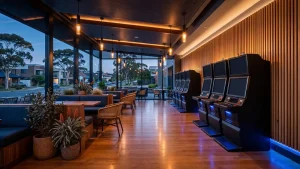
Venue hours, gaming-area schedules, online market limits and safer-play considerations all matter when searching for pokies in Brisbane.
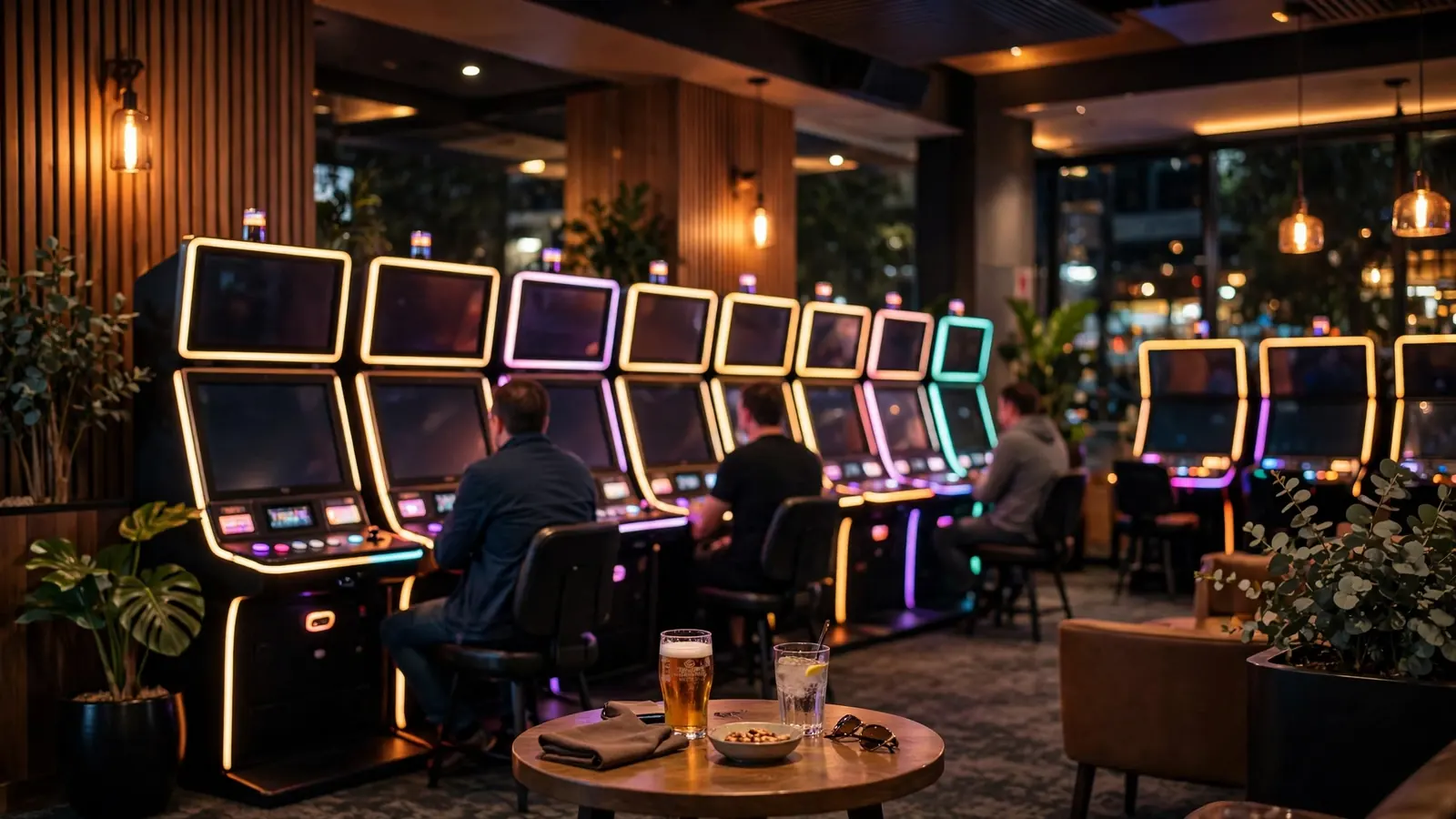
A venue’s opening hours and its pokies hours are not necessarily the same thing. A club or hotel may be open for meals, drinks or other services while its gaming area is closed, or its machines may stop operating before the venue itself shuts. Check both details before setting out; a general listing that says “open” does not settle whether pokies will be available.
Start with the venue’s official website or its own social media page. Look for separate information about trading hours and gaming hours, including any notice that the gaming area operates on a different schedule. A listing on a map or directory can be useful as a starting point, but it may not show the latest changes or distinguish the gaming area from the rest of the venue.
If the information is unclear, contact the venue directly. Ask whether the venue is open at the time you plan to arrive and whether its gaming machines will be operating then. Be precise about the day and time: a venue may have different arrangements on different days, and public holidays or temporary changes can affect what is available. Do not assume that a schedule shown for one Brisbane venue applies to another.
Before travelling, check for a same-day notice on the venue’s own channels. If you are relying on a third-party listing, compare it with the venue’s direct information rather than treating it as confirmation. If the two disagree, a direct call is the more useful check. A quick confirmation can save a trip made on the strength of a stale listing.
When you ask whether a venue is “open”, the answer may refer to the whole premises rather than the pokies. A clearer question is whether the gaming area is open and machines are operating at your intended arrival time. If staff give a closing time, check whether that is the venue’s closing time or the time gaming stops. Those details answer different questions.
If you are planning to arrive early or late, confirm the exact operating window rather than inferring it from a broad label such as “open late”. The same applies to searches for early-morning availability: a result that shows a venue as open does not prove that its machines are running. There is no single Brisbane schedule to apply across venues, so check the specific place you intend to visit.
It can also help to ask whether the gaming area has any temporary closure or change to its usual operating arrangements. This is a practical check, not a reason to assume that every venue changes its hours. A venue’s own current information is more relevant to your planned visit than a general statement about Brisbane.
Before leaving, confirm these points:
Keep the answers together rather than relying on memory. If you are comparing several options, a small table with the venue, its confirmed opening information, gaming hours and the time you checked makes differences easier to see. Mark anything not confirmed as unknown instead of filling the gap with an assumption. That is less tidy. It is also more useful.
Hours tell you when you may be able to enter or use the gaming area; they do not tell you how a particular session will go. A venue’s opening notice cannot predict a result, and “open now” is not a promise that every service is available at that moment. Keep the check narrow: confirm access and operating times, then decide whether the trip suits your plans.
A published return percentage, if you encounter one, is also not a timetable or a promise about an individual visit. It does not tell you when machines are operating, and a venue-hours listing does not establish a machine’s return setting. These are separate details; do not use one as a substitute for the other.
There is also a difference between a venue being open and its obligations while machines are running. A report on regionriverina.com.au describes a requirement taking effect from 1 July for venues with more than 20 gaming machines to have a dedicated Responsible gambling officer (RGO) on duty while those machines operate. The same report describes a one-month grace period for venues to remove signage and introduce the officers. It also says venues will be required to keep a gambling incident register, including records of occasions when a patron’s behaviour suggests they may be at risk of, or affected by, gambling harm.
Treat those details as a report about requirements, not as a substitute for checking the arrangements at a particular Brisbane venue. If the presence of an RGO or the venue’s handling of gambling-related concerns matters to your decision, ask the venue directly what applies while its machines are running. The hours check can establish when the gaming area is operating; it cannot, by itself, confirm who is on duty or how an incident would be recorded.
The practical sequence is straightforward: find the venue’s own hours, confirm machine operating times for the day you plan to go, and call if anything is unclear. That gives you a firmer answer than a generic “open” label—and keeps opening hours separate from every other question about the venue.
Choosing pokies to play in Brisbane means checking practical details as well as the overall fit for you. This list gives you a concise reference to the available licensing, deposit and payout information for each operator.
SpinsUp
SpinsUp is listed with a Curacao Gaming Control Board licence held by Dama N.V. That licensing detail gives you a concrete point to consider when reviewing the operator.
LevelUp Casino
LevelUp Casino lists a Curacao eGaming licence held by Dama N.V. and a minimum deposit of A$15, giving you licensing and entry-cost details to consider.
Rollero Casino
Rollero Casino lists a Curacao Gaming Control Board licence held by Hollycorn N.V. You can use that licensing information as one point of reference.
SkyCrown
SkyCrown lists a Tobique Gaming Commission licence, with crypto payouts taking about 10–15 minutes and fiat payouts 1–5 days. Its minimum deposit is A$30.
Wild Tokyo
Wild Tokyo lists a Curacao licence and a minimum deposit of A$10. Its stated payout times are 30–60 minutes for crypto and 1–5 days for fiat.
Kingmaker
Kingmaker lists crypto payouts at about 90 minutes and fiat payouts at 1–5 days. The minimum deposit is A$30.
MrPacho
MrPacho lists crypto payout times of 30–120 minutes and fiat payouts of 24–72 hours. Its minimum deposit is A$30.
House of Pokies
House of Pokies lists an international iGaming licence, though the jurisdiction is not named in the source. PayID payouts are stated as 1–24 hours, with a A$30 minimum deposit or A$10 when using PayID.
Uptown Pokies
Uptown Pokies lists a Curacao licence and says it has operated since 2017. Its minimum deposit is A$20.
Golden Pokies
Golden Pokies lists a Curacao licence. This gives you a licensing detail to consider when assessing the operator.
“Best” only means something once you choose the measure. If you are comparing pokies available at a venue, start with information attached to the game rather than a reputation, a theme or a story about someone’s win. A useful comparison table might record the published return setting, the rules for triggering features, the paytable and how much of the result depends on bonus rounds. Those details answer different questions; they do not combine into a promise of better results.
Return to player, or RTP, is a theoretical measure of the share of wagers a game is designed to return over extensive play. It can help compare games when the figures are stated on a like-for-like basis. It is not a forecast of what you will receive during a visit, nor does it show what the next spin will do.
A specialist review reports that some providers let casinos choose between more than one RTP setting for the same pokie. That means a game’s title alone may not tell you which return setting applies where you are playing. Check the displayed game information or ask the venue what setting is in use, then compare only figures that refer to the same game and setting. If the setting is not made clear, mark it as unknown rather than treating another venue’s figure as a match.
A higher published return may be the better result under the narrow criterion of theoretical return. It does not establish that the game will pay more during your session. The distinction matters: a percentage can describe a long-run model, not a personal outcome. No spreadsheet can make that jump.
RTP Settings
Some providers allow casinos to choose between different RTP settings for the same pokie, meaning the title alone does not guarantee a specific return setting.
The paytable shows how winning combinations are valued and may explain how features affect a result. Read it alongside the game rules: a prominent bonus feature can attract attention, but its existence does not tell you how often it will occur or what it will return. If you care about straightforward rules, clarity may be a more useful criterion than a complicated feature set. If you prefer a particular style of play, record that as a preference, not evidence of better returns.
Volatility is another label often used in comparisons, but it should not be treated as a ranking of likely profit. It describes the pattern of wins and losses a game is designed around, not a reliable schedule for your session. Where a game’s information does not explain the term clearly, do not infer a personal forecast from the label.
A practical table can keep the comparison honest:
| Criterion | What it helps you compare | What it cannot tell you |
|---|---|---|
| Published RTP setting | The game’s stated long-run return measure | Your result in a particular session |
| Paytable and rules | How combinations and features are described | Whether a feature will appear soon |
| Volatility description | The intended pattern of result variation | Whether you will win or lose |
| Clarity of information | How readily you can understand the game | Whether the game is “due” to pay |
The table is useful only when the entries are comparable. A missing RTP setting is not a low setting, and a different figure for the same title may reflect a different configuration rather than a contradiction. Keep those distinctions visible instead of forcing every game into a single score.
Each spin is generated separately by a Random Number Generator. In practical terms, a previous win or losing run does not make the next result more likely to go either way. A machine that has not paid recently is not thereby “due”, and a recent payout does not prove that another is unlikely. The sequence may feel patterned; that feeling is not a comparison criterion.
For someone asking which pokies are best paying in Brisbane, the defensible answer depends on what information is available and what “best” means to them. If the measure is a published return, compare verified settings. If the measure is understandable rules, compare those. If the measure is a particular playing style, say so plainly. None of these criteria identifies a machine that will produce a winning session.
Searching for online pokies while you are in Brisbane can make the options look like a local version of a casino floor. The legal position is different. The Interactive Gambling Act 2001 prohibits companies from providing real-money online casino games, including pokies, to people in Australia unless they hold an Australian licence. No licences of that kind have been issued, so there is no Australian-licensed online casino.
That distinction matters when you compare online offers with physical venues. A site may use Australian dollars, refer to Brisbane or show games familiar to local players, but those details do not make it an Australian-licensed service. Nor does calling a game a pokie change its legal category: real-money online casino games offered to people here fall within the prohibition.
No Legal Recourse
If an offshore casino withholds a balance or refuses to pay a win, you cannot rely on Australian legal recourse to resolve the dispute.
The Act places the relevant prohibition on providers, rather than making an individual player liable simply for playing on an offshore site that accepts them. That does not make an offshore service locally authorised or give you the protections of an Australian casino licence. It means the legal responsibility described by the Act falls on the operator.
There is an important practical limit. If an offshore casino withholds a balance or refuses to pay a win, you cannot rely on Australian legal recourse to resolve the dispute. A website’s terms, customer-support promises or polished presentation do not replace that protection. Treat money sent to such a service as money that may be difficult to recover.
Access is another part of the picture. The Australian Communications and Media Authority (ACMA) enforces the Act and blocks access to illegal offshore gambling sites; internet service providers must comply with its blocklist. A site appearing in a search or loading at one moment is therefore not proof that it is lawful, dependable or likely to remain accessible.
Phrases such as “online pokies near Brisbane” can blur two different things: a game reached over the internet and a physical venue in or around the city. Online access does not establish a local connection. Likewise, claims about the best-paying pokies in Brisbane, high limits or a maximum bet may describe an offshore operator’s game settings, not an Australian-licensed offer or a promise about what you will receive.
The same caution applies to “cashless” language. A payment option does not turn an online casino into a locally licensed business. It also tells you nothing by itself about whether the service is lawful or whether a disputed payout can be pursued in Australia. Those are separate questions.
If you are comparing online offers with pokies in Brisbane, keep the comparison grounded in what can actually be established: whether the service is authorised to provide real-money online casino games to people in Australia, and what recourse exists if something goes wrong. On the current legal framework, there is no Australian-licensed online casino to meet that first test. Offshore access is not the same as local protection.
That is the central trade-off: a site may accept Australian customers, but acceptance is not endorsement, and it does not create an Australian remedy if a payout dispute arises. A local-sounding name is not a licence.
A venue comparison should include more than the room, service or number of pokies. The way a venue responds when gambling appears to be causing harm is also relevant. Staff coverage and incident records are practical indicators to ask about; they are not a guarantee of how any individual visit will go.
A report published by regionriverina.com.au describes a requirement taking effect on 1 July: venues operating more than 20 gaming machines would need a dedicated responsible gambling officer (RGO) on duty whenever those machines are running. The report also describes a one-month grace period for venues to introduce the officer role and remove relevant signage. Because the report presents a change with a transition period, check its current status rather than assuming every Brisbane venue has already implemented it.
The distinction matters when comparing venues. An RGO assigned to the role is different from a general staff member who may also handle other duties. If you want to understand the arrangement at a particular venue, ask whether an RGO is on duty while the pokies operate and how patrons can speak with them. Do not infer staffing arrangements from a venue’s size or appearance.
The same report says venues would also have to maintain a gambling incident register. It describes recording occurrences that may indicate a patron is at risk of gambling harm or is already affected by it. That makes the register an operational safeguard: it creates a record of concerning incidents rather than leaving each interaction undocumented. It does not, by itself, show what response followed or establish that a venue is safer than another.
When comparing Brisbane venues, use these points as questions, not as a league table. You can ask whether the venue has an RGO on duty during machine operations, whether staff know how to raise a concern, and whether incidents are recorded under the relevant requirements. Clear answers tell you more about the venue’s procedures than promotional language does. If staff cannot explain who handles a concern, that is useful information for your comparison.
The rules described in the report are venue-level obligations, not a ranking of pokies venues in Brisbane or a measure of which one is “best”. Your preferred venue may depend on what matters to you, but responsible-gambling procedures are a concrete criterion to include. A polished gaming area is easy to notice. The process behind it is less visible.
Keep the timeframe in view: a reported commencement date and grace period do not establish the present arrangements at every venue. For a specific location, confirm its current procedures directly and consider whether its answers are clear and consistent. That is a more reliable comparison than assuming all venues operate identically.
Payment labels tell you how a transfer is routed; they do not establish that a gambling service is lawful, fair or transparent. That distinction matters when comparing claims about Brisbane pokies or real-money online play. PayID support is a payment feature, not evidence of a licence or a particular return setting.
PayID uses an email address, mobile number or Australian Business Number (ABN) as an alias for a bank transfer. The underlying system is the New Payments Platform (NPP), Australia’s payments infrastructure, which major banks support and which protects transfers with end-to-end encryption. To use PayID for a real-money transaction, the alias must first be linked to a bank account.
That connection does not mean every transfer will go through. A specialist gambling-payment review reports that some Australian banks, including members of the Big Four, sometimes stop PayID payments to merchants they identify as gambling-related. Bank controls can change, so a payment option displayed by a merchant is not a promise that your bank will process the transfer.
Before relying on any payment method, read the relevant bank and card terms. A specialist review of gambling payments warns that a card transaction may be classified by the issuer as a cash advance rather than an ordinary purchase. That classification can bring a fee of three to five per cent and interest from the transaction date. The amount and treatment depend on the issuer’s rules; a payment screen may not spell out the full cost.
Transaction Fees
Attention: Some card issuers may classify gambling transactions as cash advances, which can incur fees of three to five per cent and immediate interest.
Banks and card companies are also reported to block payments to gambling merchants. Do not assume that a card accepted for everyday purchases will work for a gambling transaction, or that repeated attempts will change a bank’s decision. Credit cards should not be used for online gambling services.
PayID is not an e-wallet: it routes a bank transfer through an alias, while an e-wallet holds or moves funds through a separate account. A method’s name, speed claim or presence in a payment menu says little about the protections available if a dispute arises. For offshore gambling services, Australian players have no legal recourse in Australia if the operator withholds winnings. The convenience of a transfer does not alter that risk.
The practical comparison is straightforward: identify who processes the payment, check your bank’s rules, and understand any fees or interest before authorising a transaction. If a merchant’s payment description is unclear, do not infer that the transaction is an ordinary purchase. And if a bank blocks it, treat that as a decision to respect rather than a hurdle to work around. Short version: payment access is not approval.
A nearby result can help you judge travel convenience. It cannot tell you whether a venue will suit you in every other respect, and it says nothing about what a pokie might pay. Treat location as one column in your comparison, not as a verdict.
The wording people use for Brisbane searches can vary: they may be looking around the CBD, near the airport, or simply for a place close to their current position. Those are different geographic questions. A result labelled “near me” depends on the location being used for the search; it does not establish that a venue is close to where you will actually be when you set out. Check the address and route against your starting point.
Airport-related searches need the same care. Looking for pokies at Brisbane Airport is not evidence that machines are available inside the airport, while a result described as nearby may refer to somewhere beyond the airport precinct. Don’t infer an on-site venue from a broad map result. Confirm the location itself before making travel plans.
Other location terms can also be ambiguous. “Near the CBD” might mean a short walk to one person and a substantial detour to another, depending on the starting point and route. A search that includes “Brisbane” may also be confused with a place elsewhere that shares the name, such as Brisbane in Victoria. Read the full address rather than relying on a shortened label.
Distance is useful when you are comparing practical effort: how far you need to travel, whether the route fits your plans, and whether a stop is convenient. It is not a measure of game quality or likely return. A venue closer to your accommodation has no mathematical advantage over one farther away.
The same distinction applies once you sit down to play. A pokie uses a Random Number Generator, and the result of one spin does not depend on the previous spin. A recent run of wins or losses does not make the next outcome due, and choosing a venue because it is nearby cannot change that. Proximity is a travel factor. Randomness is a separate matter.
If you are comparing nearby options, keep the questions separate: first, where is the venue and how practical is the trip? Then consider the other criteria that matter to you. Combining them into a single “best nearby” label hides what is actually being compared. A shorter journey may be the better fit for convenience; it is not a prediction of what happens on the machines.
Whether you are considering a night near South Brisbane or South Bank, the useful comparison is not just where pokies may be available. It is whether you can set boundaries before you play and stick to them. A search for a nearby venue cannot tell you which safeguards will suit you; decide what you need before making plans.
Responsible-gambling tools include deposit limits, loss limits and session time limits. Each sets a different boundary: how much money you can put in, how much you are prepared to lose, or how long you spend playing. If you choose to use them, set the limits before starting rather than relying on a decision made mid-session. A limit is a boundary, not a forecast of what a session will cost.
Self-exclusion is another option if you want to prevent yourself from gambling at venues covered by the arrangement. Check how the option works and what it applies to before relying on it. BetStop is limited to Australian-licensed operators; it does not bind offshore sites. That distinction matters: a tool’s name alone does not tell you where it applies.
A safeguard works best when it is specific enough to guide a decision. You might decide in advance what spending limit you will use, how long you will stay, and what you will do when either boundary is reached. Keep those decisions separate from any expectation that a machine will pay out. Each spin is independent, so a previous result cannot tell you what comes next.
If you are comparing options around South Brisbane or South Bank, treat the availability of a particular safeguard as something to confirm directly with the relevant venue. Do not assume that a neighbourhood name, a map result or a general description establishes which machines are operating or which tools are available there. The same applies to searches for North Brisbane or the city’s north side: location is not evidence of a particular venue’s arrangements.
A question about the maximum cash payout on a pokie is also separate from setting a personal limit. A machine’s payout rules do not determine how much you can afford to spend, and a possible payout should not be treated as a reason to extend a session. If you cannot find clear information about a rule that matters to you, pause and check before playing.
Keep the comparison practical: which limit do you need, how will you act when it is reached, and does any self-exclusion arrangement cover the setting you intend to use? If those answers are unclear, do not fill the gap with assumptions. Boundaries first.
For gambling in Australia, the legal age is 18. That rule covers pokies as well as other forms of gambling, whether play is online or at a physical venue. If you are under 18, you are not eligible to gamble.
That gives you a clear first check when considering a Brisbane CBD venue, but it does not identify which venues have pokies. A location search, a club name or a venue’s general description cannot establish machine availability. Treat those as separate questions: age eligibility is set nationally, while the presence of pokies at a particular address needs to be confirmed with that venue.
The age rule is also narrower than a general entry rule. It tells you who may gamble; it does not, by itself, say whether a person under 18 may enter a venue for another purpose. Entry conditions can depend on the venue, so do not use the gambling age as a substitute for checking that venue’s own rules.
If you are 18 or older, eligibility is only the starting point—not a recommendation to play. “Best” has no useful meaning until you choose a criterion, and no age threshold can tell you which venue or game would suit you. Nor does being legally old enough change the uncertainty of an individual result. The practical distinction is simple: age determines whether you may gamble; it does not establish what is available at a CBD venue or make a particular option better.
For a search for clubs or pokies in Brisbane’s CBD, keep the questions separate:
This avoids turning a broad CBD search into an assumption about a particular club. The legal threshold is clear; venue availability and entry are separate matters.
A Crown-related result is not, by itself, confirmation that a Crown casino or pokies venue operates in Brisbane. Search listings can be incomplete, outdated or unclear about which place they describe. Before making plans, check the venue’s own current information and confirm that the address and facilities match what you are looking for. Do not treat a page title, map pin or image as proof that pokies are available at a particular location.
Keep two separate checks in view. One is whether a physical venue exists and offers the facilities you want. The other concerns online gambling services and the regulator responsible for enforcing the relevant law. These are different questions; an online notice about a site does not establish what is available at a Brisbane venue.
The Australian Communications and Media Authority (ACMA) is the national regulator that enforces the Interactive Gambling Act 2001. It blocks access to illegal offshore gambling sites, and internet service providers must comply with its blocklist. That action concerns access to online sites. It is not a directory of Brisbane venues, nor does a site appearing in a result verify a physical address or gaming-room facilities.
This distinction matters if a page combines a venue name with online casino language. A search result may lead to a website rather than a place you can visit. ACMA’s blocking role relates to illegal offshore gambling sites; it should not be read as an endorsement of a site, confirmation of a local venue, or evidence that a named room has pokies.
For a practical check, look for consistent venue details from the venue itself: its full name, street address and description of facilities. If those details are absent or do not line up, pause before travelling. A third-party listing can help you identify what needs checking, but it should not settle the question.
“Best pokies room” also depends on what you mean by best. A venue name in a listing tells you nothing reliable about the room’s facilities or suitability. Verify the place first; assess it only once you know what it actually offers. The name alone is not enough.
Yes, Australian players can legally play on offshore sites that accept them, but offering real-money online pokies to Australians without a domestic licence is illegal for operators, and no such licences have been issued. If an offshore casino refuses to pay, you have no legal recourse in Australia.
You must be at least 18 years old to gamble online in Australia.
Yes, PayID is treated like any other qualifying deposit method at the recommended sites. Check the bonus terms for the offer’s qualifying conditions.
Yes. Some game providers let casinos choose between multiple RTP settings, so the same pokie can have different return percentages at different casinos.
Compare the bonus with the wagering required before withdrawal, plus any winnings caps and withdrawal limits. For example, a $500 bonus with a 40x requirement means $20,000 in bets before you can withdraw winnings.